

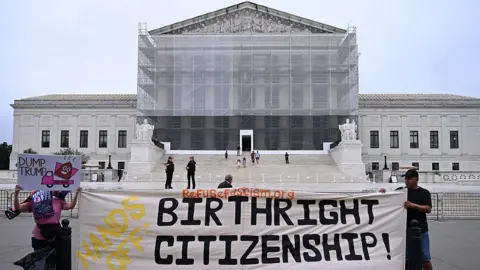
The US Supreme Court has agreed to take on a pivotal case that questions a century-old constitutional right: birthright citizenship for individuals born on American soil.
On day one in office this winter, the administration issued an executive order aiming to end this practice, but the action was subsequently blocked by federal courts after lawsuits were brought forward.
The Supreme Court's ultimate ruling will ultimately support citizenship rights for the offspring of immigrants who are in the US without authorization or on short-term permits, or it will end them altogether.
Next, the judges will schedule a date to hear arguments between the government and claimants, which involve immigrant parents and their infants.
The 14th Amendment
For over a century and a half, the Fourteenth Amendment has codified the principle that every person born in the country is a US citizen, with certain exclusions for children born to foreign diplomats and members of foreign military forces.
"All persons born or naturalized in the United States, and subject to the jurisdiction thereof, are citizens of the United States."
The disputed presidential order sought to deny citizenship to the offspring of people who are whether in the US without legal status or are in the country on non-permanent visas.
The United States belongs to a group of about 30 countries – mostly in the Americas – that provide instant citizenship to anyone born within their borders.


